Showing posts with label HG Wells. Show all posts

Tuesday, 11 September 2012

From WW1 to WOW!

In 1928, two years after the discovery of the silent film showing the Pennine Fusiliers on an alien planet, the British Government secretly funded Nikola Tesla in an attempt to contact the stranded soldiers to no apparent avail.

Almost 50 years later, a SETI research project received a signal.

On August 15th 1977, at the Big Ear Observatory in Ohio, one of the two detectors of the football field-sized array picked up an anomalous signal originating from a dead area of space somewhere in the constellation of Sagittarius.
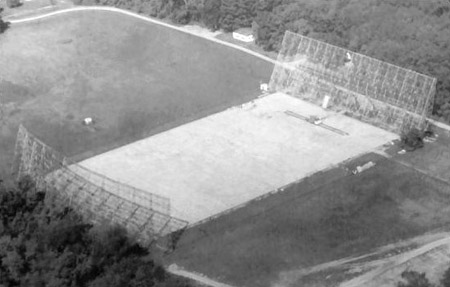
The Big Ear Radio Telescope

Reviewing the paper logs, Dr. Jerry R. Ehman recognised a strong candidate signal for extraterrestrial communication. He circled the anomaly on the print out and, in the margin, scribbled a note; one word -

Ehman's scribbled remark

The series of numbers, 6EQUJ5,  indicated an extremely powerful radio transmission. It lasted for 72 seconds before fading away. Passing through the same patch of sky minutes later, the second detector found nothing. It was as if the signal had stopped transmitting.

An intensive search for the signal, now dubbed the Wow! signal, failed to find a repeat transmission and the signal has not been detected since.

There are those who believe that the signal was sent in answer to Tesla’s original radio transmissions half a century earlier and perhaps similar in content to those allegedly recorded by the Dutch electrical engineer, Julius Wendigee, at the turn of the last century.

Could the Pennines have been attempting to send a reply? If so, what did the message contain, and why did it suddenly cease transmission? We may never know. However, there are those today who, despite the odds, still listen for English out of the void.

Friday, 15 July 2011

Landships Ho!

When the Pennine Fusiliers vanished in November 1916, they weren’t the only British troops to disappear. It is now widely acknowledged that a Mark 1 male tank, the HMLS Ivanhoe, vanished with them.

Partially inspired by HG Wells’ 1903 tale in the Strand magazine, The Land Ironclads, the tank was conceived as an armoured landship to counter the German machine gun and trench defences. They were organised into several companies under the command of the Machine Gun Corps, each with a small complement of Mark 1 male and female tanks (also called bulls and bitches).

Both male and female tanks had fore and aft light machine guns and side gun sponsons. In the Mark I male tanks these were armed with two 6 pounder Hotchkiss guns and two Hotchkiss belt-fed machine guns:


The Mark I female tank had smaller side sponsons, equipped only with four Vickers machine guns:


These armoured behemoths were thirty two feet long, weighed twenty eight tons and could reach a maximum speed of four miles per hour. They were powered by a 105hp hand-cranked Daimler engine and had a crew complement of eight. It took four of them just to turn the starting handle. It also took four men to drive it. The driver and tank commander sat  up front in a small cabin. Each tank track was also controlled by separate secondary gears, manned by two gearsmen at the rear. The other four crew were gunners and loaders.


After the tanks’ first notable victory at  Flers Courcelette, in September 1916, 'I' Company of the Machine Gun Corps Heavy Section was deployed to the Harcourt sector, with the hopes that it would help break the deadlock there before winter set in.

It wasn't to be.

Tuesday, 5 July 2011

HG Wells and his Ironclad Prophecy

Since the Napoleonic Wars at the beginning of the nineteenth century  there had been a persistent fear of invasion in Britain and there had long been a public appetite for Coming War stories or Invasion Literature, pitting Britain against a series of pitiless foreign invaders, from The Battle of Dorking by George Chesney in 1871 to The Invasion of 1910 by William Le Queux in 1906.

As well as his 1898 novel The War of the Worlds, H.G. Wells further added to the genre in 1903 by writing a prescient short story that was published in The Strand magazine. Entitled The Land Ironclads, it envisioned a navy of huge 100 foot long armoured machines like battle cruisers, driven by pedrails; wheels with feet like those of an elephant or caterpillar attached to the rims. These terrifying smoke-belching land ships bristled with guns and were filled with troops. They rolled across the battlefield, blinding the enemy with searchlights and  crushing their  trench defences.

 A little more than a decade later they were to become a reality.