Showing posts with label Somme. Show all posts

Thursday, 12 March 2015

All aboard the Omnibus for No Man's World!


Never mind the Western Front, climb aboard and we'll take you to the Final Front, here on No Man's World.

You've kept the home fires burning and today sees the publication of the collected omnibus edition of No Man's World, from that fine purveyor of pulp fiction, Abaddon Books. Follow the 'Broughtonthwaite Mates' through 800 pulse-pounding petrolpunk pages collecting  Black Hand Gang, The Ironclad Prophecy and The Alleyman together for the first time, along with a whole kitbag of bonus features.

No Man’s World is an unashamed pulp adventure series. It’s trenches and extraterrestrials, bayonets and bug-eyed monsters, as a battalion of WW1 British soldiers and nurses find themselves, and a section of their front line, transported from the Somme in 1916 to an alien world that is hostile in every respect. There, they have to struggle to survive while trying to find a way home. Imagine Charley’s War drawn by Kevin O’Neill.


Tuesday, 6 September 2011

Smile, Smile, SMLE...

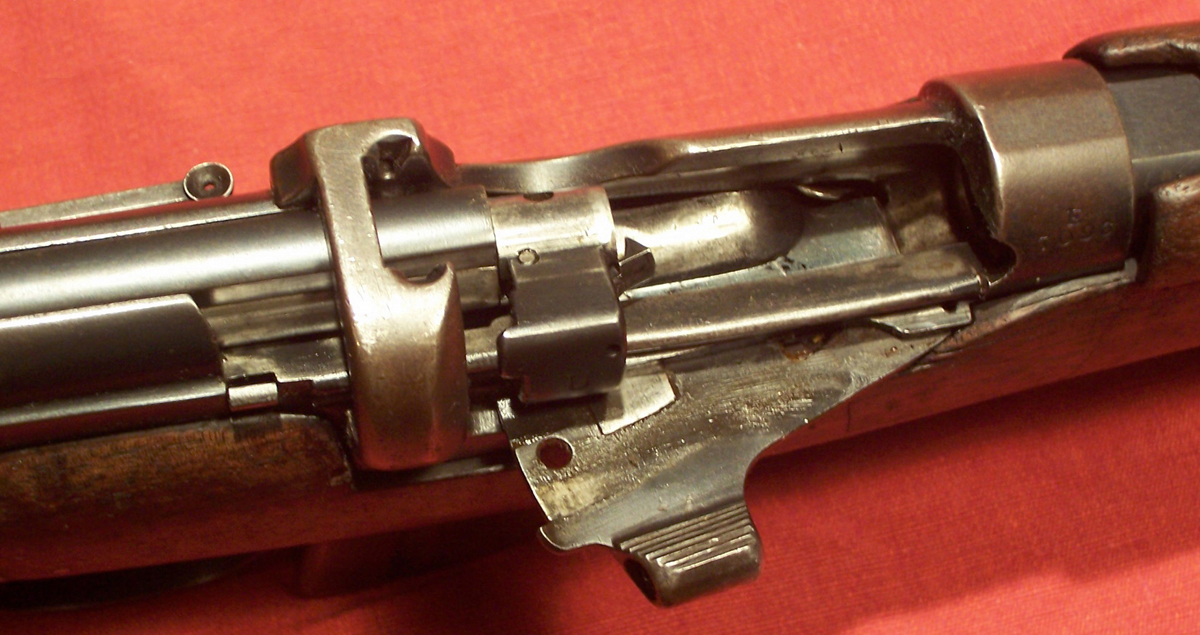
The most important piece of equipment for a British Tommy in the First World War was his rifle. For most, this was the SMLE or Small Magazine Lee Enfield rifle (the 'small' refers to the barrel length, not the magazine). It was a British Army standard issue bolt action rifle that fired .303 calibre high velocity ammunition. It had a deadly accuracy over several hundred yards and an effective range of over two thousand yards.


The magazine held ten rounds and could be loaded from the top with individual rounds or five round clips (ammunition pouches on a soldier's webbing could hold up to one hundred and fifty rounds). Soldiers could fire fifteen rounds a minute ‘rapid fire’ as a matter of course and up to twenty eight in ideal conditions. Sustained volley fire  could have such a devastating effect it was often attributed to machine guns.

However, it was an offence to fire the rifle without specific orders from an NCO or officer. To prevent  soldiers firing off entire clips, the magazine could be locked off with the cut off plate, leaving one bullet  ‘in the spout’, but preventing further rounds from being cycled up into the chamber until ordered. The magazine cut off was left open when directly engaging the enemy.

Magazine cut off

Just as lethal as the rifle, though, was the bayonet. The barrel of the Lee Enfield was much shorter than the German standard issue Mauser rifle, which put the British Tommy at a disadvantage during close combat. The answer?


A longer bayonet. Seventeen inches long, in fact.


In the right hands, the Enfield was an effective and precise weapon. It would serve the Pennine Fusiliers well in their fight for survival - for as long as the ammunition lasted.

Friday, 15 July 2011

Landships Ho!

When the Pennine Fusiliers vanished in November 1916, they weren’t the only British troops to disappear. It is now widely acknowledged that a Mark 1 male tank, the HMLS Ivanhoe, vanished with them.

Partially inspired by HG Wells’ 1903 tale in the Strand magazine, The Land Ironclads, the tank was conceived as an armoured landship to counter the German machine gun and trench defences. They were organised into several companies under the command of the Machine Gun Corps, each with a small complement of Mark 1 male and female tanks (also called bulls and bitches).

Both male and female tanks had fore and aft light machine guns and side gun sponsons. In the Mark I male tanks these were armed with two 6 pounder Hotchkiss guns and two Hotchkiss belt-fed machine guns:


The Mark I female tank had smaller side sponsons, equipped only with four Vickers machine guns:


These armoured behemoths were thirty two feet long, weighed twenty eight tons and could reach a maximum speed of four miles per hour. They were powered by a 105hp hand-cranked Daimler engine and had a crew complement of eight. It took four of them just to turn the starting handle. It also took four men to drive it. The driver and tank commander sat  up front in a small cabin. Each tank track was also controlled by separate secondary gears, manned by two gearsmen at the rear. The other four crew were gunners and loaders.


After the tanks’ first notable victory at  Flers Courcelette, in September 1916, 'I' Company of the Machine Gun Corps Heavy Section was deployed to the Harcourt sector, with the hopes that it would help break the deadlock there before winter set in.

It wasn't to be.

Monday, 1 November 2010

At the Going Down of the (Alien) Sun...

Ninety four years ago today, the 13th Battalion of the Pennine Fusiliers vanished from the Somme leaving, in their wake, a great scar on the landscape.

This year, for the first time in living memory, there will be no WW1 veterans gathered at the memorial in the nearby town of St. Germaine or laying a wreath at the site of the Harcourt Crater to remember long fallen comrades, comrades who found themselves, as the Hepton Footage would have us believe, on another world.

Their legacy may yet exist on that nameless alien planet and it may be that "They shall not grow old as we who are left grow old" at least, that is, if the theory of Relativity holds sway.

But today in Broughtonthwaite, at 7.30am wreaths were laid at the foot of the war memorial before St Chads in memory of those who vanished this day, at that time, in 1916.


We will remember them.

Monday, 14 June 2010

Hun Horror at Harcourt?

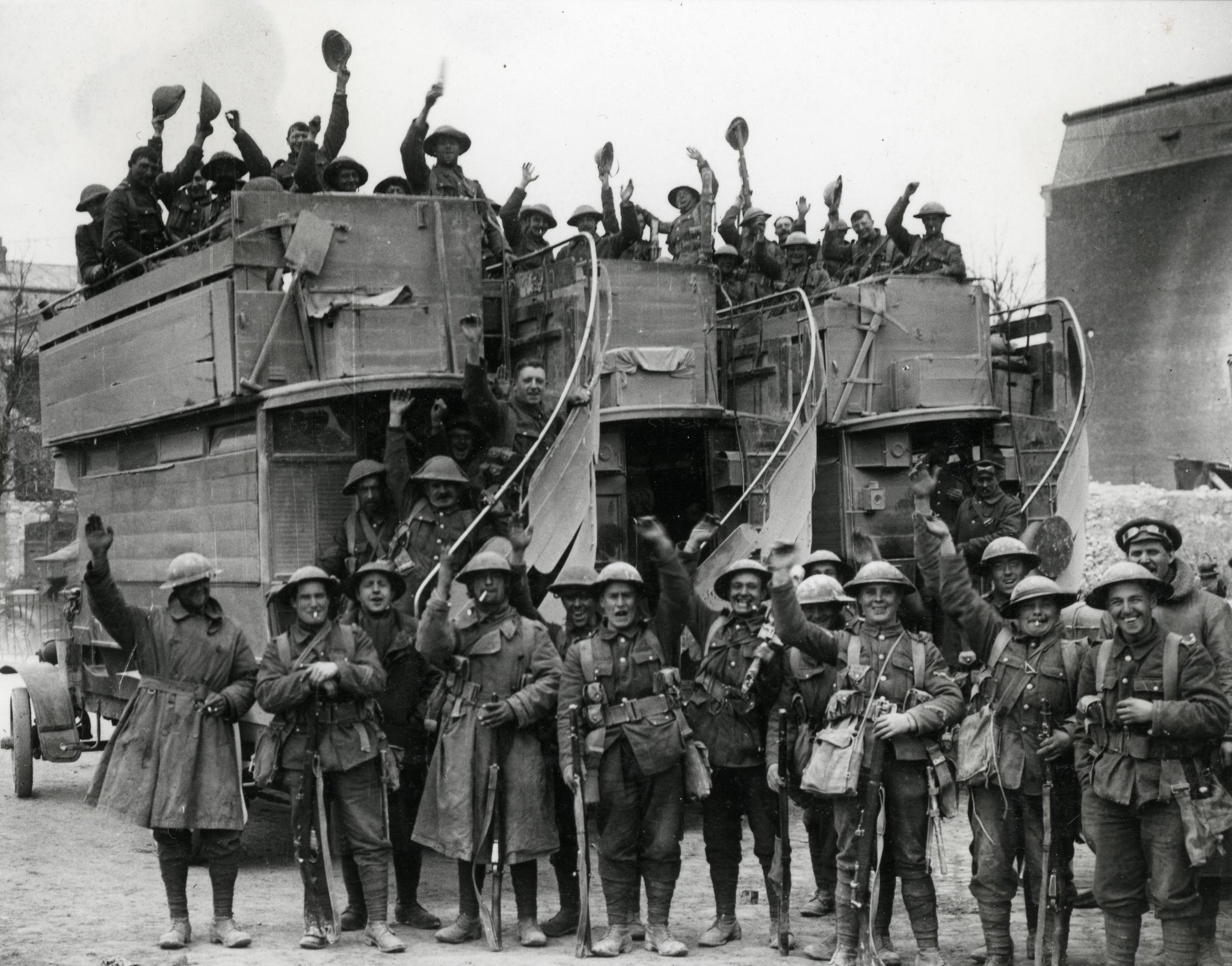
The Battle of the Somme had dragged on throughout the summer of 1916 and, in its dying days, at twenty minutes past seven on the morning of 1st  November, nine hundred men of the 13th Battalion of the Pennine Fusiliers, a Pals Battalion known as the ‘Broughtonthwaite Mates’,  went over the top.

Their objective was to attack the entrenched German machine gun positions in Harcourt Wood. It meant crossing over quarter of a mile of No Man’s Land, up a gentle incline that recent autumn rains had turned into a lethal quagmire. It was to be the last large scale attack of the campaign. In a bid to finally take and hold the Harcourt sector of the German line that had resisted the British advance all summer, the 13th Battalion marched resolutely into the gas cloud drifting across No Man’s Land to do their duty for King and Country.

And vanished.

The northern mill town of Broughtonthwaite, where the regiment had its barracks, was understandably devastated when the tragedy was reported by the local newspaper.

Broughtonthwaite Mercury, Thursday 2nd November 1916

As the town mourned its heavy losses, the relatives pressed for answers from a reticent Government.  Philanthropist and magnate, George Everson of Everson's Brewery, twice mayor of Broughtonthwaite and whose son, Second Lieutenant  James Charles Everson, was among the missing, brought considerable pressure to bear on the government.

In response, the War Office claimed that the Germans had set off mines dug deep below the British positions, packed with ‘an experimental explosive’. However eye witnesses at the time, as the cutting above illustrates,  claimed to hear no explosion that could account for such a catastrophic event.

It didn’t take long for rumours to spring up concerning the extraordinary circumstances of the Pennines’ disappearance. Some ascribed supernatural explanations. Others talked of Bosche Zeppelins and death rays.

Questions were asked in Parliament. The government stuck to its original statement, seeking to turn the tragedy into propaganda while secretly setting up a Committee of Enquiry to investigate the incident. Its eventual findings would be sealed for an unprecedented one hundred and fifty years. The families and descendants of those lost will have to wait until the opening of the records in 2069 to discover the official verdict.