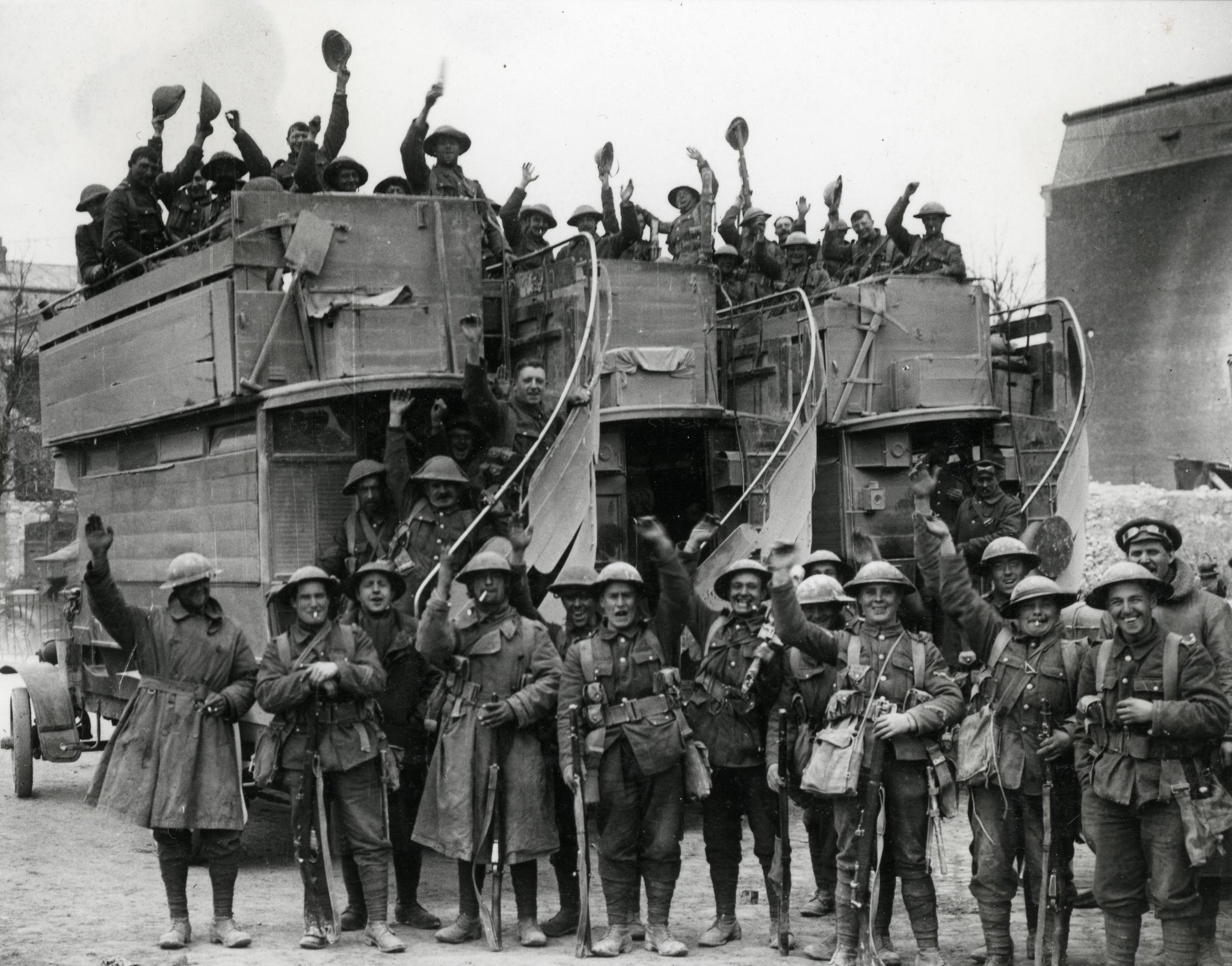
Showing posts with label No Man's World. Show all posts

Thursday, 10 November 2016

Weird War One: Electric Weaponry


During the First World War, technology advanced at a great pace with machines and devices rapidly becoming obsolete as they were superseded by events or enemy technology.

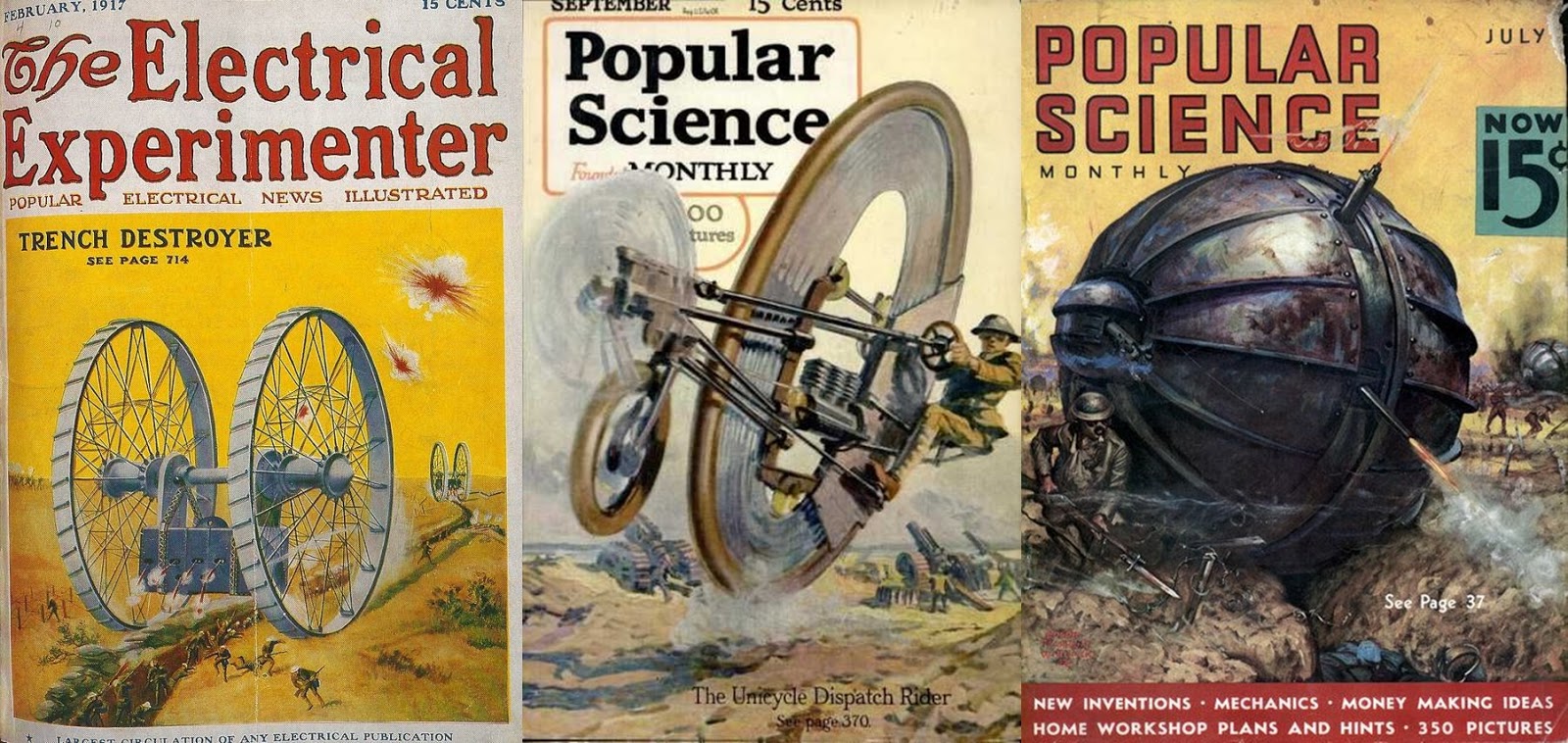
The War Office was always open to new ideas for weapons that might give them an edge over the German army and many periodicals of the time were enthusiastically filled such with proposals, although a great many proved impractical.

There were persistent rumours that Nikolai Tesla was working on a death ray and, in England, Harry Grindell Matthews claimed to have invented a remote-controlled anti-Zeppelin weapon, for which the Admiralty allegedly paid him £25,000. After the war, in 1923 he, too, also claimed to have developed a Death Ray.

In No Man's World, the Pennine Fusiliers manage to supplement their diminishing supply of ammunition by adapting alien Chatt technology to create a rechargeable electrical weapon of their own. It was partly inspired by a proposed real world application. The June 1917 issue of The Electrical Experimenter featured an article describing an electrically-charged weapon for use again the Hun on the battlefield.


Adapting the German idea of the flammenwerfer, or flame-thrower, the idea revolved around  electrifying pressurised salt water or a sulphuric acid solution. The liquid tank carried by the soldier was attached by cables to a generator and transformer in the trenches that would deliver up to 15,000 volts. It was suggested that the rubber-clad operator could then fire a stream of electrified water up to 100 feet, stunning or killing the enemy. Needless to say the whole enterprise was ill-conceived, not to mention dangerous, and was never actually put into service.


Strange but true.

Tuesday, 1 November 2016

Centenary of the Disappearance of the Pennine Fusiliers

Today marks the one hundredth anniversary of the disappearance of the the 13th Battalion of the Pennine Fusiliers. A century ago today the 'Broughtonthwaite Mates' went over the top and vanished, leaving only the enduring mystery of the Harcourt Crater, a fog of myths and a web of conspiracy theories in their wake.


Everson lifted his gas hood and blew his whistle before clumsily shoving the cloth back into his collar. Waving with his pistol, he watched his men scale the ladders. To his left, one fell back into the trench, immediately cut down. From beyond the parapet came cries and screams. He grabbed a rung and hauled himself up, cleared the sandbags, stepped out onto the mud and began to run, slogging through terrain the consistency of caramel, seeking to lead his men forward. He’d seen them all over the top with none left for the Battle Police to round up, which was no more than he’d expect of them. Another man fell in front of him. Everson stepped reluctantly over the body. It was not his job to stop and see if he were wounded or dead. The stretcher bearers would follow. Over to his left, he saw one of the tank machines as it nosed down into a shell hole and then reared up to clear it and rumble onwards along its terrible trajectory as spumes of earth exploded around it.

Atkins heard the whistle from far away, as if underwater, then another and another; some fainter, some louder. Up and down the line, dozens of subalterns blew their whistles or shouted their men forwards.This was it. Under the tidal pull of fear he felt the swell of vomit and bile rise, burning a tide mark in his throat and felt a growing urge to piss. He didn’t want to go over the top. You’d be mad to.
Someone hit him on the shoulder. Twice.
Shitohshitohshitohsh –
Atkins screamed in rage and terror, which wasn’t clever because it fogged up his eye pieces. He could barely see where he was going as it was. He scrambled up the ladder and over the parapet, He looked around. There to his left he saw sergeant’s stripes. Hobson was walking resolutely forward. Somewhere amid the explosions he caught the rolling tinny snap of the marching snares and the harmonious wail of the bagpipes playing as the Jocks advanced over on their left flank.

Around Atkins, men were marching forward into the clouds of gas; a rising tide of asphyxiating death. The ground was soft and treacherous underfoot. Muffled by his gas hood, the crump and boom of shells assumed a continuous roar that made his ear drums crackle. He glanced to his left. Pot Shot and Mercy were striding forward. He could make out the weak sunlight glinting off the tin triangles on their backpacks. 

It was nearly quarter of a mile to the forward German lines. Running with full pack through this mud would tire you out before you got there and you’d have no puff left for the fight. Already he could feel the muscles of his legs begin to ache from pulling against the mud. It was better, so they said, to walk and conserve your strength. Fair enough. But that bollocks about carrying on and not seeking cover? Stuff that.
Following the tape he reached the British wire. He could hear the insistent stuttering of the British machine guns, while above them shells burst, leaving lazy black woolly clouds hanging in the air as shards of hot metal ripped down through bodies below.

Ahead of him now, men began to drop, some hanging on the wire as if they were puppets whose strings had been cut. He walked on past the fallen, some dead, some wounded, crying and begging for help. Most still wore their gas hoods and Atkins was grateful that he could not see their faces. You weren’t supposed to stop for them. You weren’t allowed to. Carry on. Forward. Always forward. He walked on aware that every step could be his last. Was it this one? This one? This?
The great bank of greenish grey fog, a mixture of chlorine, cordite and smoke rolled over them, enveloping them like a shroud. Atkins lost sight of his Section. He stepped aside to avoid a shell hole that loomed up out of the ground before him and found his leg caught. He looked down; a hand had grabbed his mud-encrusted puttee. A man, maskless, green froth oozing slowly from his mouth, gagged and struggled, tearing at his own throat with a bloodied hand, drowning on dry land as the chlorine reacted in his lungs. Atkins tugged his ankle free and marched on. Shell holes were death traps now. The gas was sinking to the lowest point it could find, settling in pockets like ghostly green rock pools, where the weary and wounded had sought shelter.
As he walked on, he began to experience a light-headed feeling. Around him the gas cloud seemed to glow with a diffuse phosphorescence. The noise of battle, the rattle of machine guns and the constant crumpcrumpcrump of artillery, the zing of bullets seemed somehow muffled and distant. He stumbled as he missed his footing. He looked down. His body seemed to be longer that it should, stretching and undulating until a wave of vertigo overwhelmed him. Letting go of his rifle, he dropped to his hands and knees. The small area of ground before him seemed to swim and ripple gently and, no matter how hard he tried, he couldn’t bring it into focus. Sweat began to prickle his face, he felt a pressure in his head, something trickled from his ear and he could taste the iron tang of blood running from his nose. The whole world seemed to tilt and from the periphery of his vision an oozing darkness spilled inwards until he could see no more than a few square inches of the Somme mud before his face. What remained of his vision filled with bursting spots of light as the world began to slip away…


 -No Man's Land Book One: Black Hang Gang, Chapter 3 "The World's Verge"


Saturday, 11 June 2016

The Monocled Mutineer Part 4 – Controversy and Conspiracy

After Toplis had been buried in secret, rumours began to circulate in Penrith that there was more to the shooting than the police admitted and that there was information in their possession that they had not made public.

Hasty calls to London on the night of the shooting were coming to light and there was a suggestion that the Chief Constable had acted under considerable political pressure. Whatever the case, within a year he had resigned to be replaced by someone unconnected with the incident.

In 1978, William Allison and John Fairley published their book, The Monocled Mutineer.  It suggested that the Establishment conspired to cover up a mutiny by soldiers at the Etaples Training Camp in 1917, which the official War Diary refers to merely as ‘a disturbance’. 

Believing Toplis to be a ringleader, the authorities put considerable resources, including the Secret Service, into finding and silencing him and any co-conspirators. Many of the men involved in the mutiny were later killed in a bloody offensive at Passchendaele.

Allison and Fairley go on to imply that the Government, to keep the Etaples mutiny secret, issued discrete orders that Toplis was not to be taken alive. After persistently evading the authorities for several years, Percy Toplis’ luck finally ran out in June 1920 when he was shot and killed by police of the Cumberland Constabulary.

Whatever the truth about Toplis, Allison and Fairley's book raised questions in Parliament that resulted in the Government’s first public acknowledgement of the Etaples mutiny.

In 1986, when the book was made into a TV series for the BBC, the transmission was a source of controversy. Ill-advisedly advertised as ‘based on true events’, right-wing press and politicians criticised its left-wing bias and revisionism as ‘a tissue of lies’. However, the bloody depiction of the trenches did much to puncture cherished ideals such as ‘patriotism’ and ‘duty’ that pervaded much of WW1 history as it was taught.  Then, as now, the BBC was under fire from a right-wing government and the programme contributed to the resignation of then Director General Alasdair Milne.

 
Paul McGann, star of 'The Monocled Mutineer' in conversation at Liverpool John Moores University with Professor Gary Sheffield, Professor of War Studies at University of Wolverhampton and chair Professor Frank McDonough, April 2015


In recent years Michael Gove, as Minister for Education, rounded on the ‘left-wing myths’ being perpetuated about the Great War, citing Oh What a Lovely War, Blackadder and The Monocled Mutineer along with ‘Left-wing academics all too happy to feed those myths by attacking Britain’s role in the conflict.’

Today, the debate over Toplis' participation at Etaples still continues. Government documents pertaining to the mutiny, if any still exist, are sealed until 2017. There is hope that their disclosure next year might settle the question of Percy Toplis' involvement once and for all.

I suspect there will remain more questions than answers, allowing the myth of the Monocled Mutineer to persist, along with the Angel of Mons, the Phantom Bowmen, and the Harcourt Crater.

Thursday, 9 June 2016

The Monocled Mutineer Part 3 – The Burial

Ninety-six years ago today, on the morning of 9th June 1920, following an ambush by disguised policemen and a hastily convened inquest with unanswered questions, Percy Toplis was buried in Penrith.

But not even that was without its drama.

When a policeman arrived outside Penrith’s Beacon Edge hillside cemetery at 8 am, he informed the expectant crowd of Press that they had postponed the 9am funeral until 1pm because the coffin was not yet ready, so a disappointed press corps dispersed.

When they reconvened at lunchtime, they found a note on the cemetery gates informing them that that the funeral had already taken place. While their anger was directed toward the police for the deception, it was actually the Home Office and War Office that had decreed that Toplis should be secretly interred in an unmarked grave.


Penrith Police Station, where Toplis' body was kept

To that end, the police co-opted Harry Bartley, who owned a flatbed lorry. At 8.15 that morning, officers loaded Toplis’ coffin aboard the lorry from the Weights and Measure room of the Penrith police station, where his body had been kept, before covering it with rags, carpets and sacks. Bartley then drove up to the cemetery, half fearing that he might be followed or that the coffin would bounce off the bed of the truck.

He delivered the coffin to the cemetery chapel, where plain-clothes police officers intended to inter the body in an unmarked grave before anyone discovered their deception. However, cemetery parson Reverend Law insisted on conducting a full funeral service, arguing that the deceased had not actually be convicted of anything and any judgement should be left to Heaven, before leading the police in the singing of a hymn.

Only then was Toplis was then hastily buried in a grave plot  ‘listed as No. 7135… under a yew tree at the highest point of the graveyard’ according to Allison and Fairley’s book, ‘The Monocled Mutineer’.

Percy Toplis’ grave remains unmarked to this day, despite several campaigns to erect a marker.

However, despite the police and the authorities’ desire to bury the incident along with Toplis, he  continues to exert a fascination, even today, as fact and fiction meld into myth.

Next: The Monocled Mutineer – Controversy and Conspiracy

Wednesday, 8 June 2016

The Monocled Mutineer Part 2 – The Inquest

Ninety six years ago today, on the 8th June 1920, the inquest into the death of Percy Toplis was held in Penrith, conducted by Colonel Halton, Coroner of East Cumberland.

Mortuary photo of Percy Toplis


23 year old Toplis, a deserter, petty criminal, racketeer, and possibly mutineer, accused of the murder of taxi driver Sidney Spicer, had been ambushed and shot two days before by three disguised policemen and the son of the Chief Constable for Cumbria who had tagged along. All were armed with revolvers.

The countrywide manhunt for Toplis had been the subject of much press sensationalism at the time and reporters and public flocked to the inquest. Toplis’ wheelchair-bound and widowed mother Elizabeth and his sister, Winifred also attended the inquest having travelled from Derbyshire. The police were represented by a lawyer during the proceedings ‘in view of certain possibilities’, while Toplis had no legal representation.

After Halton heard the police account of the shooting, to the point of overlooking several inconsistencies in their evidence, it took the jury only three minutes to decide that 'Toplis was justifiably killed by a revolver-bullet fired by a police officer in the execution of his duty' and to recommend that all three officers be honoured for their actions.

Even so, there were unanswered questions and papers like the Manchester Guardian queried the inquest’s verdict.

Although accused of Spicer’s murder in his absence by an inquest, Toplis had not been charged with the crime. Why was he the subject of such an concerted manhunt over a single alleged murder? Why had no attempt to arrest him been made?  Why did the policemen disguise themselves? Why did they not identify themselves as police? Why did they shoot to kill?  Which of them fired the fatal shot? Who ultimately made the decision to issue them non-regulation firearms? With the only other witness dead, there was no-one to challenge their account.

In the following weeks, the press ran ever more lurid and outrageous stories about Toplis and his time on the run, and the mythologising began.

However, Toplis’ story had one last chapter... 

Monday, 6 June 2016

The Monocled Mutineer Part 1 - The Shooting

Ninety six years ago today, on the evening of June 6th 1920, on the road from Carlisle to Penrith, one of Britain's most wanted men, Percy Toplis, was shot dead by police.

One of the inspirations for No Man's World, and the character of Lieutenant Jeffries, my first introduction to Toplis came back in the 1970s in the Strange Stories strand of World of Wonder magazine, which also exposed me to other strange First World War stories such as the Angel of Mons and the Christmas Truce football match.

Percy Toplis - in an officer's uniform

A petty criminal, serial deserter and imposter, Toplis first enlisted in the Royal Army Medical Corps in 1915 and has been linked with the British Army Mutiny at the Etaples Training Camp in 1917. Believed to be a ring leader, he was hunted by the Military Police. Among the more supportable claims against him were his persistent impersonation an officer and his hiding in plain sight by re-enlisting in the Royal Army Service Corps under his own name. His story became the subject of a book, The Monocled Mutineer by William Allison and John Fairley, adapted for a four-part TV series by Alan Bleasdale and starring Paul McGann.

Paul McGann as Percy Toplis in The Monocled Mutineer

However, there are doubts over Toplis' involvement in the mutiny. Some researchers claim he was onboard a troopship with his regiment bound for India when the mutiny occurred. Others point to the fact that there were several other soldiers named Percy Toplis at the time.

Whatever the truth, Toplis' notoriety continued after the war when he became involved in a scheme to sell army petrol on the black market. Wanted for the murder of taxi driver Sidney Spicer, he became the subject of a huge police manhunt, with his photograph circulated all over the country. Avoiding detection by again impersonating a decorated officer, he fled north to Scotland.  A local gamekeeper, suspicious of the smoke coming from an abandoned crofter’s cottage, informed the police. When confronted by local constable George Greig, Toplis fired several shots from a service revolver, wounding the policeman before fleeing south.

At Carlisle Castle, Toplis had the cheek to seek refreshment from the Border Regiment stationed there before continuing south on foot toward Penrith along the A6. The man in partial military dress aroused the suspicions of Constable Fulton. He returned later with armed reinforcements in a commandeered car. Disguising their uniforms, they confronted Toplis by Romanways Farm where, on drawing his revolver, Toplis was shot and killed.

Romanways Farm, looking south toward Penrith,


Plaque unveiled at Romanways Farm, November 2015


But his story wasn’t over yet.

Sunday, 1 November 2015

No Man's World only 99p Today!


99 years ago today, the brave men of the 13th Battalion of the Pennine Fusiliers  disappeared from the Western Front. Some say they were simply decimated by the brutal action of the day, but we know better...

To celebrate the glorious exploits of the men of the 13th, and their adventures as depicted  in the No Man's World series, Abaddon have dropped the price of these tales of Interplanetary Tommies to only 99p (or (£2.99 if you fancy the Omnibus, which is also stuffed with extra goodies).

So throw up a salute to the men of the 13th and put your hand in your wallet on this most auspicious of occasions...

No Man’s World is out now!

Black Hand Gang
Buy: UK|US

The Ironclad Prophecy
Buy: UK|US

The Alleyman
Buy: UK|US


No Man’s World Omnibus 
Buy: UK|US

Thursday, 26 March 2015

Thursday, 12 March 2015

All aboard the Omnibus for No Man's World!


Never mind the Western Front, climb aboard and we'll take you to the Final Front, here on No Man's World.

You've kept the home fires burning and today sees the publication of the collected omnibus edition of No Man's World, from that fine purveyor of pulp fiction, Abaddon Books. Follow the 'Broughtonthwaite Mates' through 800 pulse-pounding petrolpunk pages collecting  Black Hand Gang, The Ironclad Prophecy and The Alleyman together for the first time, along with a whole kitbag of bonus features.

No Man’s World is an unashamed pulp adventure series. It’s trenches and extraterrestrials, bayonets and bug-eyed monsters, as a battalion of WW1 British soldiers and nurses find themselves, and a section of their front line, transported from the Somme in 1916 to an alien world that is hostile in every respect. There, they have to struggle to survive while trying to find a way home. Imagine Charley’s War drawn by Kevin O’Neill.


Tuesday, 29 January 2013

The Accrington Pals

Like the Broughtonthwaite Mates, the Accrington Pals, were another northern Pals Battalion. Accrington, though, was the smallest town in England to field a volunteer battalion of a thousand men, a battalion that was effectively wiped out within the first twenty minutes of the Battle of the Somme. Barely anyone in Accrington was left untouched by the tragedy.

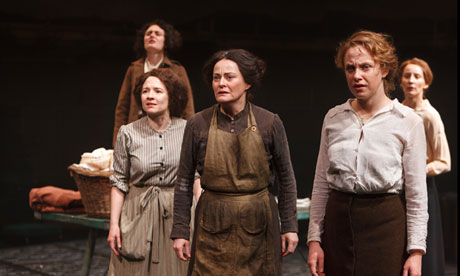
The Royal Exchange’s revival of Peter Whelan’s The Accrington Pals (17 Jan - 16 Feb),on its home turf so to speak, contrasts the experience of the men in the trenches of the First World War with the lives of the women at home.

Photo by Jonathan Keenan

The men volunteered for Kitchener’s new army in a spirit of bravado and comradeship, seeing the war as an adventure and escape from their daily toil.  Left behind, the pragmatic womenfolk of the mill town find themselves in a rapidly changing world that presents new hardships, opportunities and fears.
 "If there’s one thing that narks the men about this war its the way it shows them up for creating such mysteries round things.  My God! Providing both your eyes point forwards and your arms aren’t on back to front, anyone can drive a tram!"

Photo by Jonathan Keenan

The play is, by turns, poignant and funny and is underscored by dramatic irony; the audience is aware of the fate that awaits the men and the grief the women will face - but not meekly. Frustrated by rumour and newspaper propaganda surrounding The Big Push, the women of Accrington marched en masse to the town hall to demand the truth.

Photo by Jonathan Keenan

The cast are excellent, with great female characters shouldering the weight of the play, from Emma Lowndes as May, the single and independent market stall holder with her own private burden, to Sara Ridgeway’s ardent young Eva, Laura Elsworthy as the naive young mill girl, Bertha, Rebecca Callard’s earthy Sara and Sarah Belcher as the embittered Annie.

The Royal Exchange knows its space well and its set designs are always inspired. This time, designer Johnathan Fensom sets the scenes with  simple cobbles, a tram line, a market stall and a water pump. Being performed  in the round,  there is an immediate intimacy with the audience that a proscenium arch often can’t match. If you get the chance, go and see it.

Besides, you can’t go wrong with a theatre that looks like the set  for a TARDIS interior.


Thursday, 1 November 2012

We Will Remember Them

Today marks the ninety-sixth anniversary of the disappearance of the 13th Battalion of the Pennine Fusiliers.

On November 1st 1916, at Harcourt sector on the Somme, 900 men of the Broughtonthwaite Mates vanished in what became known as the Harcourt Event.

The Harcourt Crater, the biggest crater on the Western Front, is a lasting memorial to their fate, a fate film footage, found by a French farmer in 1926, would have us believe had them fighting for their survival on an alien world. 

Today in Broughtonthwaite, as for the past 95 years, wreaths were laid at the foot of the war memorial before St Chads at 7.30am, in memory of those who vanished on this day, at that time, in 1916.

The Heroes of Harcourt. We will remember them.


Friday, 5 October 2012

The Alleyman Book Launch


THURSDAY, OCTOBER 11th, 2012  
7.30pm - 9.00pm
at THE FAB CAFE
109 PORTLAND STREET, MANCHESTER, M1 6DN 


THE ALLEYMAN is the third book in the No Man's World series from Abaddon Books.

To celebrate, join author Pat Kelleher and the boys from Abaddon at Fab Cafe in Manchester as we travel to another world where World War One Tommies are trapped on an alien world and must fight for survival.

Tea! Sing songs! Readings! A small nip of something! Buy signed books! Tally ho, we're taking the Best of British to the heathen aliens - ABADDON BOOKS NEEDS YOU!!


Entry is free, so ENLIST TODAY!  come along!

On November 1st 1916, 900 men of the 13th Battalion of the Pennine Fusiliers vanished without trace from the Somme battlefield only to find themselves on an alien planet.
Now Lieutenant Everson finds he must quell the unrest within his own ranks while helping foment insurrection among the alien Khungarrii.
Beyond their trenches, Lance Corporal Atkins and his Black Hand Gang are reunited with the ironclad tank, Ivanhoe, and its crew to face the obscene horrors that lie within the massive Croatoan Crater, a place inextricably tied to the history of the Khungarrii and native urmen alike.
Above it all, Lieutenant Tulliver of the Royal Flying Corps, soars free of the confines of alien gravity, where the true scale of the planet’s mystery is revealed. However, to uncover the truth he must join forces with an unsuspected ally.

 Praise for No Man’s World:
“Meticulous historical detail with a pulse-pounding pulp plot” - Red Rook Review
"Rip-roaring fun from beginning to end" - SFX Magazine
"All the attributes of great pulp fiction, but with a 21st century edge" - Boston Book Bums
"Blazes with action and suspense" - Graeme's Fantasy Book Review
"Abaddon are onto a real winner"  -Total Sci-Fi


Friday, 24 August 2012

The Shape of Things to Come

Pye Parr's stunning re-creation of an old cinema lobby card from the 1951 film, Space Tommies, itself inspired by the Hepton Footage of the Pennine Fusiliers, now adorns the cover of The Alleyman, the third book in the No Man's World series from Abaddon Books. 
Out 9th October (USA & Canada) and 11th October (UK)

Lieutenant Tulliver of the Royal Flying Corps takes to the air to solve the mystery of No Man's World

Friday, 19 August 2011

Tesla and the Tommies - Part 2

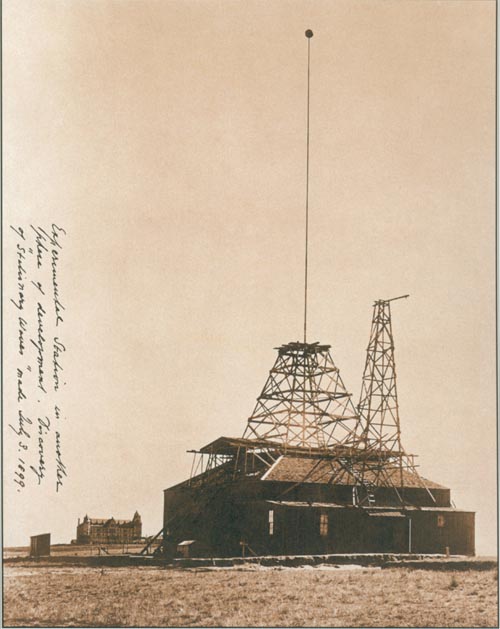
It wasn’t just Tesla’s theories about ‘death rays’ that the British Government were interested in. In 1899 Tesla claimed to have received faint radio signals from outer space on his array at Pike’s Peak in Colorado Springs and believed them to be a form of interplanetary communication.

 Tesla's Colorado Springs Laboratory
"The feeling is constantly growing on me that I had been first to hear the greetings of one planet to another."
-Nikola Tesla, "Talking with Planets", Colliers Weekly February 9th 1901.
Then, in 1926, the Hepton footage was discovered in a French field, along with the journals and letters that constituted the rest of the Lefeuvre find. The silent black and white film, depicting the Pennine Fusiliers apparently alive and on an alien world, was shown to packed picture houses around the world. If the Pennines really were stranded on another planet, it occurred to some in the War Office that there maybe a way of communicating with them. They urgently sought confirmation from Tesla. Partly financed in secret by the British Government, Tesla continued to refine his Teslascope in an attempt to contact the battalion by radio, hoping to detect a responding radio communication from them. No such signal was ever detected or, if it was, its contents have been kept secret to this day.

In the end, the Government officially declared the Hepton footage to be a hoax but nevertheless continued its clandestine funding of Tesla’s research for some years after, suggesting that at least one or two powerful political figures believed in the provenance of the film. But, in the early 1930s, Ramsay MacDonald's Government became disillusioned with Tesla’s progress and withdrew its support.

However, the fate of the 'Broughtonthwaite Mates' along with this early governmental research served to foster an underlying attitude within Whitehall that, in the 1950s, eventually inspired the Government’s decision to form the British Rocketry Group.

Friday, 22 July 2011

Communications Trench No.1

With the publication yesterday of The Ironclad Prophecy, the second book in the No Man’s World series, here’s your chance to catch up with all the bumf from HQ in a round-up of recent latrine rumours, reviews, readings, interviews and podcasts.

First up is a wind-up gramophone recording from Abaddon Books’ own dugout, where David Moore debriefs Pat Kelleher on the background to the No Man’s World series.

Next comes a barrage of questions from behind the lines courtesy of Gareth Wilson at The Falcata Times, who followed up with an explosive review.

Graeme Flory over at Graeme’s Fantasy Book review also gave the book a bright Very flare of a review and wanted to know more about the historical inspirations behind the series.

And for those of you who are still wondering about going ‘over the top’ into No Man’s World, Boston Book Bums recently fired off a brilliant review of the first book in the series, Black Hand Gang.

Still not enough for you? Then ‘Stand to’ on the fire step and take a peek over the parapet of Book 2 with David Moore’s trench periscope as Pat Kelleher reads an extract from The Ironclad Prophecy at this year’s Alt.Fiction.

Finally, Cavan Scott wanted to know which book I wished I written. Find out what it is here.

And if you’re curious about the tank featured in the books, check out previous posts here and here and follow PennineFusilier on Twitter.

Wednesday, 30 June 2010

Missing in Action

The War ground on and the rest of Britain moved on with it. The suffering of the families in Broughtonthwaite though, continued, with parents, wives  and relations petitioning the War Office for news on their lost ones. Not for them the relief or grief of scouring the newspapers for familiar names in the casualty lists or the lists of dead. A confirmation of death would be a blessing compared to the agony of not knowing.

However, the War Office was unable or unwilling to give an answer. The extraordinary circumstances surrounding the 13th Battalion elicited no special treatment from the bureaucrats. The relatives were dealt with in the same brisk, business-like manner as the families of tens of thousands of other soldiers. The men were simply listed as Missing. Not Dead, or Died of Wounds, or Killed in Action, just Missing.

Reproduced courtesy of the Cooper family.

And that continued to be the official response until the Committee of Enquiry into the Harcourt Incident delivered its secret report. The men of the 13th Battalion were officially declared Dead in 1921 and the families of the Broughtonthwaite Mates had to take what little comfort they could in that.

Until the events of 1926, that is.

Monday, 14 June 2010

Hun Horror at Harcourt?

The Battle of the Somme had dragged on throughout the summer of 1916 and, in its dying days, at twenty minutes past seven on the morning of 1st  November, nine hundred men of the 13th Battalion of the Pennine Fusiliers, a Pals Battalion known as the ‘Broughtonthwaite Mates’,  went over the top.

Their objective was to attack the entrenched German machine gun positions in Harcourt Wood. It meant crossing over quarter of a mile of No Man’s Land, up a gentle incline that recent autumn rains had turned into a lethal quagmire. It was to be the last large scale attack of the campaign. In a bid to finally take and hold the Harcourt sector of the German line that had resisted the British advance all summer, the 13th Battalion marched resolutely into the gas cloud drifting across No Man’s Land to do their duty for King and Country.

And vanished.

The northern mill town of Broughtonthwaite, where the regiment had its barracks, was understandably devastated when the tragedy was reported by the local newspaper.

Broughtonthwaite Mercury, Thursday 2nd November 1916

As the town mourned its heavy losses, the relatives pressed for answers from a reticent Government.  Philanthropist and magnate, George Everson of Everson's Brewery, twice mayor of Broughtonthwaite and whose son, Second Lieutenant  James Charles Everson, was among the missing, brought considerable pressure to bear on the government.

In response, the War Office claimed that the Germans had set off mines dug deep below the British positions, packed with ‘an experimental explosive’. However eye witnesses at the time, as the cutting above illustrates,  claimed to hear no explosion that could account for such a catastrophic event.

It didn’t take long for rumours to spring up concerning the extraordinary circumstances of the Pennines’ disappearance. Some ascribed supernatural explanations. Others talked of Bosche Zeppelins and death rays.

Questions were asked in Parliament. The government stuck to its original statement, seeking to turn the tragedy into propaganda while secretly setting up a Committee of Enquiry to investigate the incident. Its eventual findings would be sealed for an unprecedented one hundred and fifty years. The families and descendants of those lost will have to wait until the opening of the records in 2069 to discover the official verdict.