Thursday, 1 November 2012

We Will Remember Them

Today marks the ninety-sixth anniversary of the disappearance of the 13th Battalion of the Pennine Fusiliers.

On November 1st 1916, at Harcourt sector on the Somme, 900 men of the Broughtonthwaite Mates vanished in what became known as the Harcourt Event.

The Harcourt Crater, the biggest crater on the Western Front, is a lasting memorial to their fate, a fate film footage, found by a French farmer in 1926, would have us believe had them fighting for their survival on an alien world. 

Today in Broughtonthwaite, as for the past 95 years, wreaths were laid at the foot of the war memorial before St Chads at 7.30am, in memory of those who vanished on this day, at that time, in 1916.

The Heroes of Harcourt. We will remember them.


Friday, 5 October 2012

The Alleyman Book Launch


THURSDAY, OCTOBER 11th, 2012  
7.30pm - 9.00pm
at THE FAB CAFE
109 PORTLAND STREET, MANCHESTER, M1 6DN 


THE ALLEYMAN is the third book in the No Man's World series from Abaddon Books.

To celebrate, join author Pat Kelleher and the boys from Abaddon at Fab Cafe in Manchester as we travel to another world where World War One Tommies are trapped on an alien world and must fight for survival.

Tea! Sing songs! Readings! A small nip of something! Buy signed books! Tally ho, we're taking the Best of British to the heathen aliens - ABADDON BOOKS NEEDS YOU!!


Entry is free, so ENLIST TODAY!  come along!

On November 1st 1916, 900 men of the 13th Battalion of the Pennine Fusiliers vanished without trace from the Somme battlefield only to find themselves on an alien planet.
Now Lieutenant Everson finds he must quell the unrest within his own ranks while helping foment insurrection among the alien Khungarrii.
Beyond their trenches, Lance Corporal Atkins and his Black Hand Gang are reunited with the ironclad tank, Ivanhoe, and its crew to face the obscene horrors that lie within the massive Croatoan Crater, a place inextricably tied to the history of the Khungarrii and native urmen alike.
Above it all, Lieutenant Tulliver of the Royal Flying Corps, soars free of the confines of alien gravity, where the true scale of the planet’s mystery is revealed. However, to uncover the truth he must join forces with an unsuspected ally.

 Praise for No Man’s World:
“Meticulous historical detail with a pulse-pounding pulp plot” - Red Rook Review
"Rip-roaring fun from beginning to end" - SFX Magazine
"All the attributes of great pulp fiction, but with a 21st century edge" - Boston Book Bums
"Blazes with action and suspense" - Graeme's Fantasy Book Review
"Abaddon are onto a real winner"  -Total Sci-Fi


Tuesday, 11 September 2012

From WW1 to WOW!

In 1928, two years after the discovery of the silent film showing the Pennine Fusiliers on an alien planet, the British Government secretly funded Nikola Tesla in an attempt to contact the stranded soldiers to no apparent avail.

Almost 50 years later, a SETI research project received a signal.

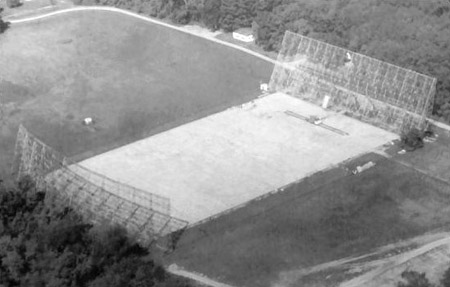
On August 15th 1977, at the Big Ear Observatory in Ohio, one of the two detectors of the football field-sized array picked up an anomalous signal originating from a dead area of space somewhere in the constellation of Sagittarius.

The Big Ear Radio Telescope

Reviewing the paper logs, Dr. Jerry R. Ehman recognised a strong candidate signal for extraterrestrial communication. He circled the anomaly on the print out and, in the margin, scribbled a note; one word -

Ehman's scribbled remark

The series of numbers, 6EQUJ5,  indicated an extremely powerful radio transmission. It lasted for 72 seconds before fading away. Passing through the same patch of sky minutes later, the second detector found nothing. It was as if the signal had stopped transmitting.

An intensive search for the signal, now dubbed the Wow! signal, failed to find a repeat transmission and the signal has not been detected since.

There are those who believe that the signal was sent in answer to Tesla’s original radio transmissions half a century earlier and perhaps similar in content to those allegedly recorded by the Dutch electrical engineer, Julius Wendigee, at the turn of the last century.

Could the Pennines have been attempting to send a reply? If so, what did the message contain, and why did it suddenly cease transmission? We may never know. However, there are those today who, despite the odds, still listen for English out of the void.

Friday, 24 August 2012

The Shape of Things to Come

Pye Parr's stunning re-creation of an old cinema lobby card from the 1951 film, Space Tommies, itself inspired by the Hepton Footage of the Pennine Fusiliers, now adorns the cover of The Alleyman, the third book in the No Man's World series from Abaddon Books. 
Out 9th October (USA & Canada) and 11th October (UK)

Lieutenant Tulliver of the Royal Flying Corps takes to the air to solve the mystery of No Man's World

Tuesday, 6 September 2011

Smile, Smile, SMLE...

The most important piece of equipment for a British Tommy in the First World War was his rifle. For most, this was the SMLE or Small Magazine Lee Enfield rifle (the 'small' refers to the barrel length, not the magazine). It was a British Army standard issue bolt action rifle that fired .303 calibre high velocity ammunition. It had a deadly accuracy over several hundred yards and an effective range of over two thousand yards.


The magazine held ten rounds and could be loaded from the top with individual rounds or five round clips (ammunition pouches on a soldier's webbing could hold up to one hundred and fifty rounds). Soldiers could fire fifteen rounds a minute ‘rapid fire’ as a matter of course and up to twenty eight in ideal conditions. Sustained volley fire  could have such a devastating effect it was often attributed to machine guns.

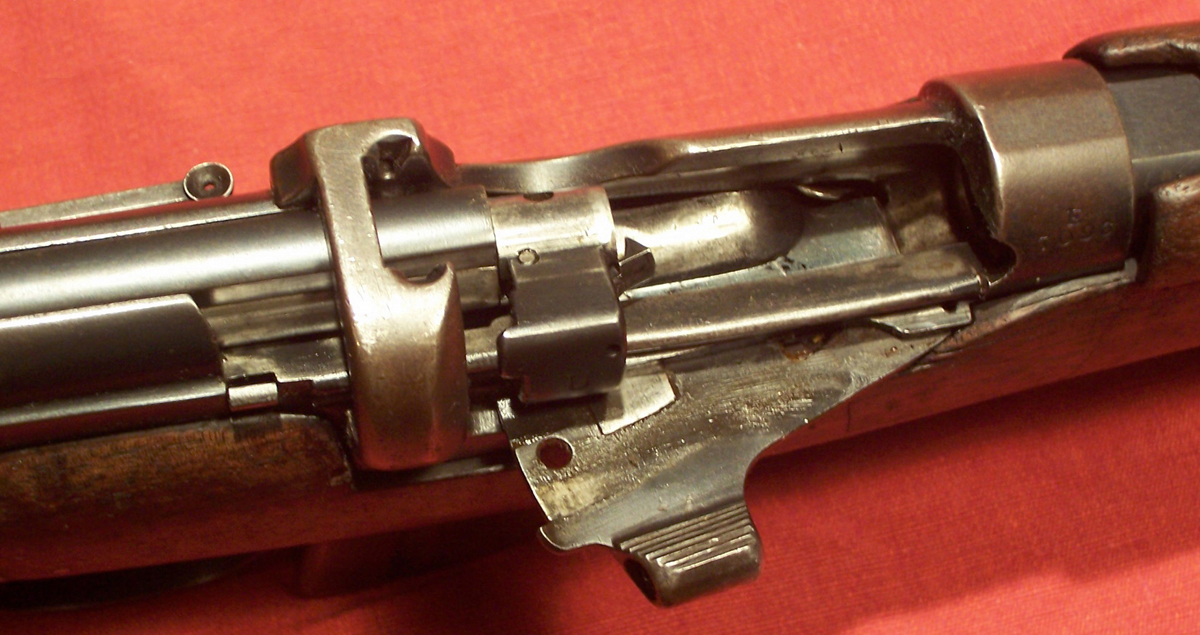
However, it was an offence to fire the rifle without specific orders from an NCO or officer. To prevent  soldiers firing off entire clips, the magazine could be locked off with the cut off plate, leaving one bullet  ‘in the spout’, but preventing further rounds from being cycled up into the chamber until ordered. The magazine cut off was left open when directly engaging the enemy.

Magazine cut off

Just as lethal as the rifle, though, was the bayonet. The barrel of the Lee Enfield was much shorter than the German standard issue Mauser rifle, which put the British Tommy at a disadvantage during close combat. The answer?


A longer bayonet. Seventeen inches long, in fact.


In the right hands, the Enfield was an effective and precise weapon. It would serve the Pennine Fusiliers well in their fight for survival - for as long as the ammunition lasted.

Friday, 19 August 2011

Tesla and the Tommies - Part 2

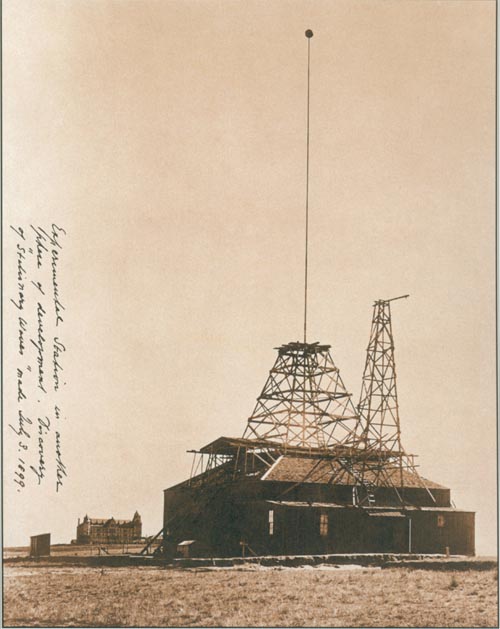
It wasn’t just Tesla’s theories about ‘death rays’ that the British Government were interested in. In 1899 Tesla claimed to have received faint radio signals from outer space on his array at Pike’s Peak in Colorado Springs and believed them to be a form of interplanetary communication.

 Tesla's Colorado Springs Laboratory
"The feeling is constantly growing on me that I had been first to hear the greetings of one planet to another."
-Nikola Tesla, "Talking with Planets", Colliers Weekly February 9th 1901.
Then, in 1926, the Hepton footage was discovered in a French field, along with the journals and letters that constituted the rest of the Lefeuvre find. The silent black and white film, depicting the Pennine Fusiliers apparently alive and on an alien world, was shown to packed picture houses around the world. If the Pennines really were stranded on another planet, it occurred to some in the War Office that there maybe a way of communicating with them. They urgently sought confirmation from Tesla. Partly financed in secret by the British Government, Tesla continued to refine his Teslascope in an attempt to contact the battalion by radio, hoping to detect a responding radio communication from them. No such signal was ever detected or, if it was, its contents have been kept secret to this day.

In the end, the Government officially declared the Hepton footage to be a hoax but nevertheless continued its clandestine funding of Tesla’s research for some years after, suggesting that at least one or two powerful political figures believed in the provenance of the film. But, in the early 1930s, Ramsay MacDonald's Government became disillusioned with Tesla’s progress and withdrew its support.

However, the fate of the 'Broughtonthwaite Mates' along with this early governmental research served to foster an underlying attitude within Whitehall that, in the 1950s, eventually inspired the Government’s decision to form the British Rocketry Group.

Friday, 12 August 2011

Tesla and the Tommies - Part 1

In the minds of the public and the press, Nikola Tesla, famed scientist and inventor, became embroiled the Harcourt Event shortly after the First World War and has been linked with it ever since.

Nikola Tesla circa 1890

In the aftermath of the war, the War Office held an enquiry into the 1916 events at Harcourt. Despite the official explanation that the Harcourt crater was created when the Germans blew up a mine filled with ‘experimental explosives’, popular conjecture focused on ‘death rays’. Indeed, in 1914, the War Office itself had offered a reward of £25,000 to anybody who could create such a weapon. It was no great leap to assume that the Germans might have been working on something similar and Tesla appeared before the enquiry testifying to the scientific possibility of such a ray causing the crater.

Tesla claimed to have built such a ‘death ray’ himself. Many other people subsequently made similar claims, including Britain’s own Harry Grindell Matthews. However, Tesla was said to have been testing the application of this ‘peace’ ray technology as early as 1908, at his Wardenclyffe  laboratory. When Robert Peary set off on an expedition to the North Pole, Tesla asked him to look out for any unusual activity as he intended to test his ray. Peary saw nothing. Tesla assumed his ray failed.

Tesla's Wardenclyffe tower

It wasn’t until 1927, however, that news of the 1908 Tunguska explosion reached the outside world, after a Russian expedition to the remote site. When it was implied that Tesla’s ray might have  been the cause of the explosion, to some it was proof positive of Tesla’s unwitting involvement in the Harcourt Event, too, suggesting that a further test of Tesla’s death ray misfired, causing the deaths of 900 British soldiers. It was a theory Tesla was quick to refute, citing the Hepton footage itself, which had been found a year earlier and quite clearly showed the soldiers to be alive. The fact that shortly afterwards the British government  declared the footage to be a hoax only served to fuel the conspiracy theories.

There were others, though, that saw a different explanation for what happened at Tunguska - a failed attempt  at recreating the Croatoan Working.